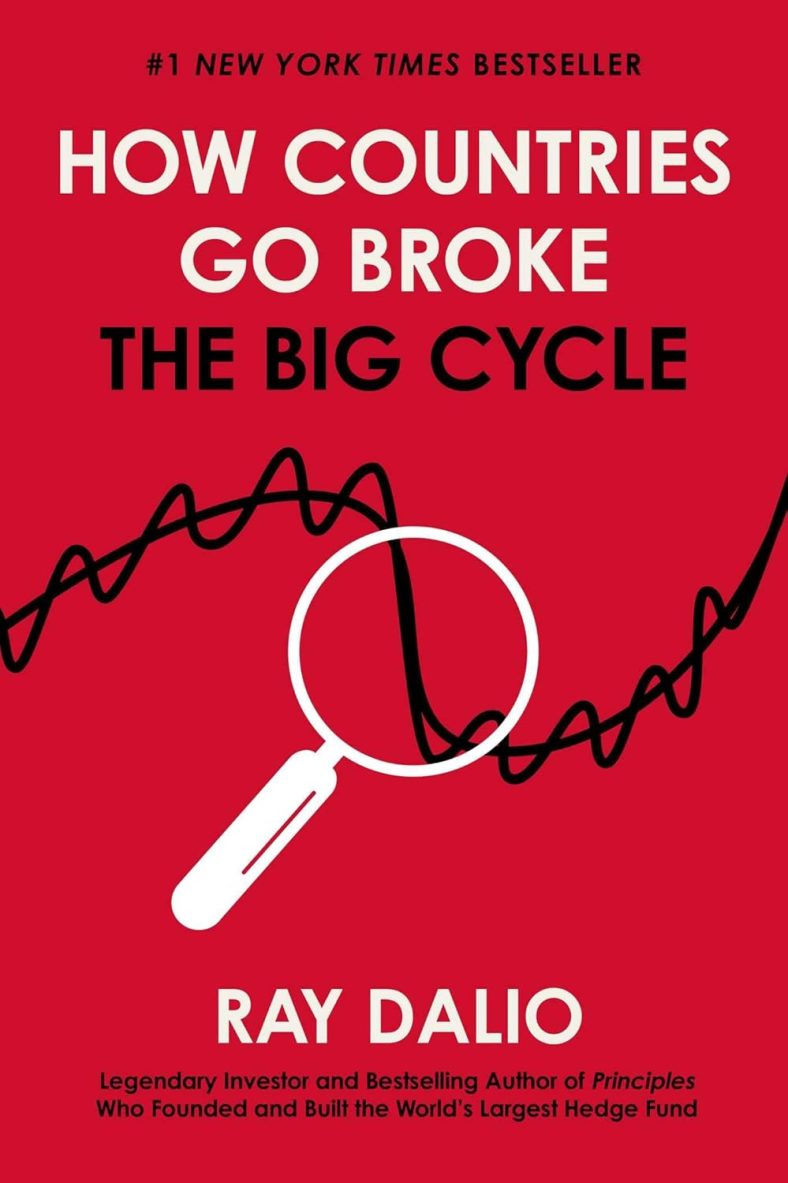
How Countries Go Broke
Excellent Book
Outstanding storytelling and suspense.
Table of Contents
Introduction
Have you ever wondered what it would be like if your country were slowly going bankrupt and no one was telling the public? This is an important issue to consider, as being informed helps. Ray Dalio discusses this in his new book, “How Countries Go Broke: The Big Cycle.”
Dalio explains complex economic ideas in simple terms. This makes it easy for everyone to understand, not just economists or Wall Street experts. This book is important for anyone who cares about their country’s future, financial stability, and their children’s well-being.
Dalio looks at historical patterns and economic cycles. He shares valuable information that can help readers recognise the risks their country may face and understand what those risks could mean for their finances.
About the Author – Ray Dalio
Ray Dalio is an inspiring leader. He founded Bridgewater Associates, the world’s largest hedge fund, and is a key figure in macroeconomics. Dalio is known for being straightforward and promoting radical transparency. He has predicted major economic downturns, including the 2008 financial crisis. His books, *Principles* and *Principles for Navigating Big Debt Crises*, have reached readers worldwide and have become bestsellers.
Why This Book Matters Today
This book comes out at an important time as we face big challenges. As we get closer to 2025, the United States will deal with a high national debt. Inflation is unpredictable, raising concerns about what consumers can afford and the overall health of the economy. Rising geopolitical tensions also add uncertainty as international relationships become strained.
In this setting, Dalio looks at how debt spirals form and lead countries into cycles of more borrowing and financial trouble. He shares historical examples of nations that have failed due to poor debt and financial management. Dalio gives practical strategies and advice for individuals, policymakers, and governments to help them navigate this tough environment and avoid potential economic crises.
Understanding the Big Cycle
The book focuses on an interesting idea called the Big Debt Cycle. Ray Dalio believes that all countries go through this pattern in their economic journeys.
What is the Big Debt Cycle?
The Big Debt Cycle describes how countries build up debt over time and how this can lead to financial crises. Debt usually increases slowly until it hits a dangerous peak. After reaching this peak, countries often have to reset, which can happen through defaults or currency devaluations.
The Short-Term Debt Cycle
The short-term debt cycle presents a remarkable journey, taking about 5 to 10 years to complete. During this time, governments change interest rates and borrow money to stimulate economic growth. Ray Dalio points out that governments often misuse these strategies. They tend to avoid necessary economic corrections, which can create bigger problems later on.
The Long-Term Debt Cycle
The long-term debt cycle is a captivating economic trend that unfolds throughout 50 to 75 years, illustrating the resilience and evolution of our financial landscapes. During this period, countries can accumulate large amounts of debt and lose control over spending. This can lead to economic stagnation, social unrest, and even financial collapse. Dalio warns that the United States is nearing this critical point, similar to challenges faced by past great powers like the British Empire. It is important to watch these trends closely and plan accordingly.
Core Concepts in the book
This book explains complex economic ideas in a simple and visual way using data. The main themes are:
– How money is created and destroyed
– Tools used in monetary policy, like quantitative easing and interest rates
– The misconception that borrowing is free
– The advantages and disadvantages of being the global reserve currency
How Countries Go Broke
Countries face financial problems for several reasons. They usually go bankrupt when they:
- Borrow too much money.
- Avoid making difficult decisions.
- Inflate their currency to delay payment issues.
- Lose the trust of the public.
Dalio also points out warning signs that show a country may be in financial trouble. These signs include a high debt-to-GDP ratio, political issues, and capital leaving the country.
Case Studies : How Countries Go Broke
Dalio provides examples to support his claims.
First, Greece and Italy faced a crisis from 2010 to 2012. Austerity measures and rules from the European Central Bank (ECB) made things worse.
Second, Argentina often faces financial trouble and goes through periods of default.
Finally, China has managed its debt growth carefully so far.
Ray Dalio’s Solutions in How Countries Go Broke
Dalio offers hope despite a gloomy outlook. He suggests the following actions:
- Work together across party lines to balance the budget.
- Gradually pay down debt using controlled inflation.
- Be more transparent in how central banks operate.
- Invest in infrastructure to create productive debt.
He believes working together in a nonpartisan way is the best path forward.
Broader Forces Impacting Debt Cycles
Dalio highlights how changes in debt can relate to important global challenges we face:
– Political polarisation makes it hard for governments to address important issues effectively.
– Rising tensions between countries, especially between the United States and China, create uncertainty and risk around the world.
– Rapid advancements in technology and artificial intelligence are changing the job market, leading to fewer job opportunities and lower tax revenue for public services.
– More climate disasters and ongoing pandemics put a lot of pressure on government budgets, forcing tough decisions about how to allocate resources and set priorities.
The U.S. is at a tipping point regarding the topic of “How Countries Go Broke.”
The United States is in a serious situation with its national debt close to 130% of its GDP. Dalio warns that today’s America is similar to past empires that fell because of:
– Problems with currency
– Overextending the military
– Cultural divisions
There is still time to act, but we need to move quickly.
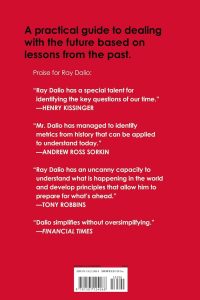
Editorial Praise and Public Reception in “How Countries Go Broke”
The book has received a lot of praise for being clear and urgent:
– Lawrence Summers calls it “an invaluable resource.”
– Henry Paulson says it’s a “gift to humanity.”
– Readers describe it as “eye-opening,” “timely,” and “essential reading.”
Final Verdict: Is the Book Worth Reading?
Yes, How Countries Go Broke is worth reading for everyone—policymakers, investors, students, and concerned citizens. It helps you understand economic cycles and how to prepare for the future.
Pros:
– Easy to read
– Provides detailed models and data
– Uses real-world examples
Cons:
– Can be dense at times
– Requires some basic knowledge of economics
Conclusion
Ray Dalio has written another important book. In a world with economic uncertainty, *How Countries Go Broke* gives you tools to understand and get ready for possible challenges. If you want to learn about the future of the economy and how to safeguard your finances, this book is for you. Read More
FAQs
- Is the book too technical for non-economists?**
No, it’s not too technical. Dalio explains complex topics using simple examples and clear explanations, even with data and charts.
- How does this book compare to Dalio’s Principles?
“Principles” focused on personal and organizational decisions, while “How Countries Go Broke” looks at larger economic issues.
- What is the biggest lesson in the book?**
Ignoring debt cycles can lead to disasters that are easy to predict. However, taking informed actions can change the results.
- Can the U.S. go broke?
Yes, Dalio says that the U.S. can go broke, but this will happen slowly and can be prevented with the right actions.
- How often should governments read books like this?
Governments should read books like this regularly. The insights can help with both crisis responses and long-term national plans.
Buy on Amazon